Spain’s Property Market in 2026: Why Costa Blanca Still Stands Out for Value

- What’s Happening in Spain’s Property Market: The Numbers Behind the Story
- Property Affordability in Spain: Regional Differences
- Costa Blanca: Not Just More Affordable, but Better Value
- Costa Blanca in 2026: Who Is Buying Here
- What to Keep in Mind: Realistic Risks
- Final Thoughts: Costa Blanca as a Strategy, Not an Impulse Buy
What’s Happening in Spain’s Property Market: The Numbers Behind the Story
In March 2026, property valuation firm Sociedad de Tasación published its latest report on the Spanish housing market. The figures speak for themselves.
The average price per square metre reached €2,085. That is the highest level since December 2007, when the market peaked before the financial crisis. Annual growth came in at 7.4%. And although analysts expect it to ease slightly to 7.2% by mid-year, it is still too early to talk about stabilisation.
The housing affordability index fell to 84 points, against a benchmark of 100. That means purchasing power has dropped by 16% relative to the market’s equilibrium level. Put simply, housing has become significantly less affordable for Spanish buyers.
The average buyer now needs 7.8 years of full salary to buy a home, which is 3.6% more than a year ago. For comparison, in 2015 this figure was around five years.
Transaction volume remains stable, but growth has stalled. The market has levelled off, and future trends will depend on mortgage rates, the supply of affordable housing, and the broader economic situation.
Property Affordability in Spain: Regional Differences
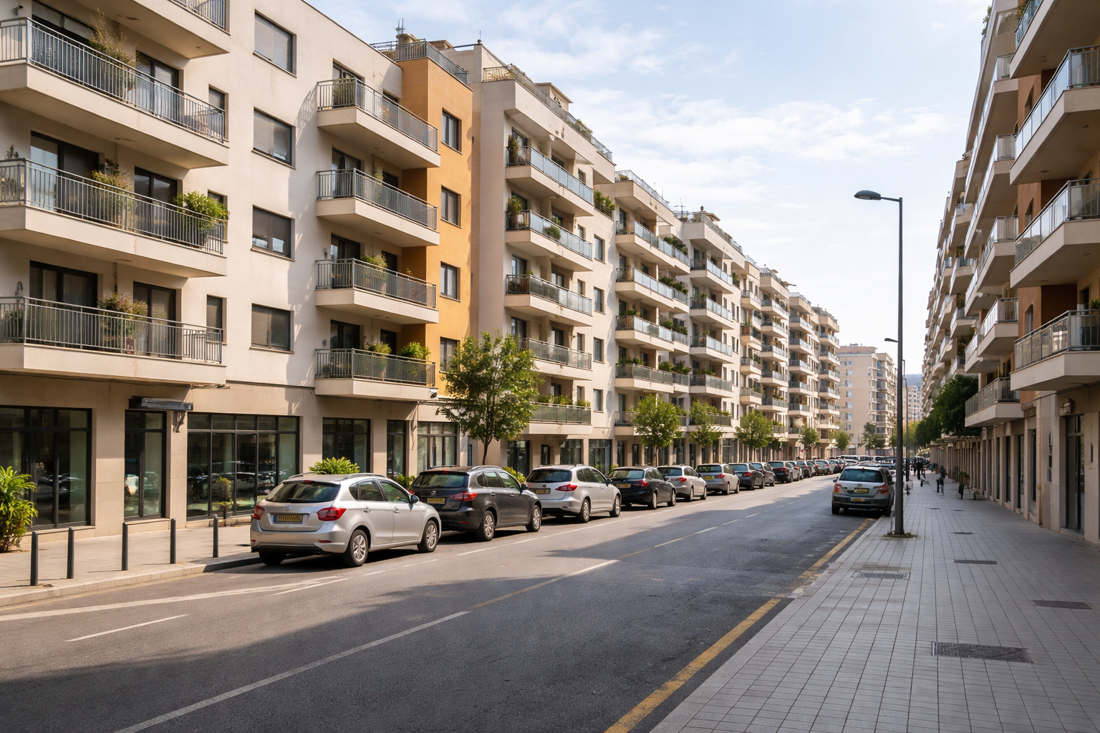
Spain is a country of contrasts, and the property market reflects that clearly. The regions leading price growth are:
Community of Madrid — €3,422/m² (+8.8% year-on-year)
The capital attracts demand from across the country thanks to its concentration of jobs, business, and culture. But housing affordability for local residents is deteriorating rapidly.
Balearic Islands — €2,994/m²
Mallorca and Ibiza have become synonymous with luxury, and prices reflect that. Supply is physically limited, while demand remains consistently high.
Catalonia — €2,872/m²
Barcelona remains a magnet for international buyers, digital nomads, and investors. A shortage of new-build supply continues to push prices upward.
At the other end of the spectrum is Extremadura, where prices average €1,024/m². It is an inland region with no coastline, relatively low tourist demand, and more limited growth prospects.
And what about Costa Blanca? The coastline of Alicante province is not among Spain’s most expensive regions, and that is good news for buyers. Average prices here remain in the €1,800–2,200/m² range, depending on the town and the property’s distance from the sea. We published a detailed guide to the area, from Torrevieja to Dénia, in our article “Costa Blanca Areas: Where to Buy Property by the Sea” . That is 30–40% lower than in Madrid and Barcelona, while offering a comparable quality of life.
Costa Blanca: Not Just More Affordable, but Better Value
Let’s look at why the Mediterranean coastline of Alicante continues to appeal to buyers who are guided not only by emotion, but by the numbers as well.
1. Affordability Without Sacrificing Lifestyle
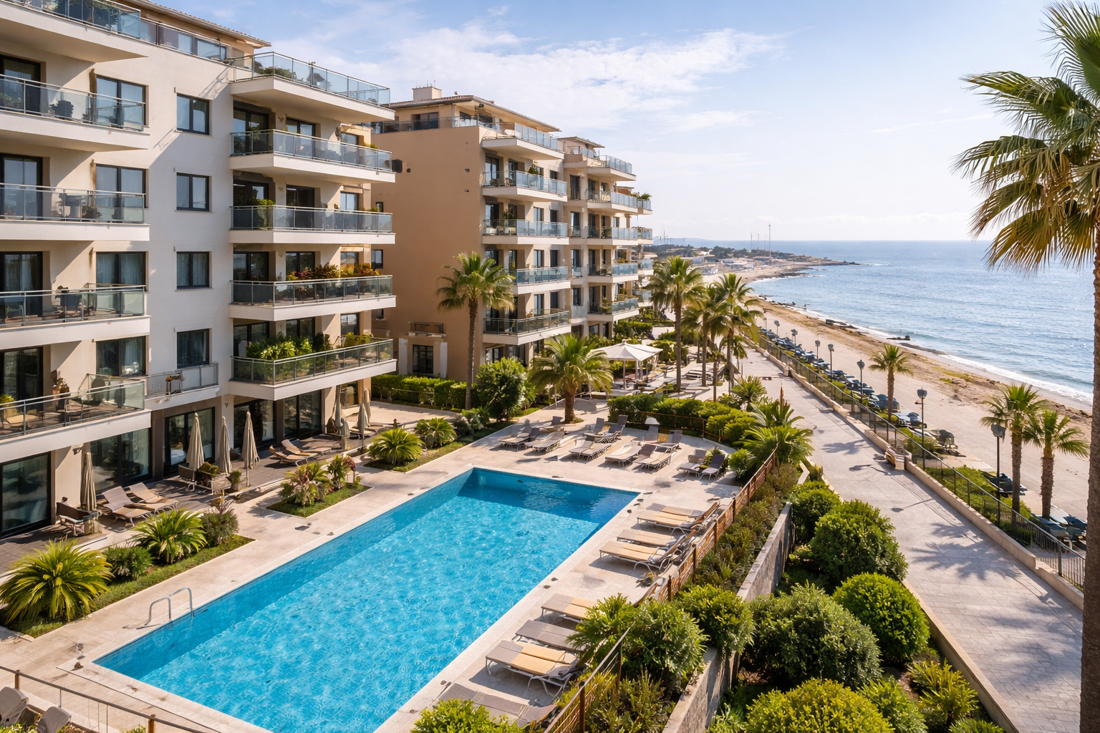
Costa Blanca offers moderate prices with a premium lifestyle. With 300 days of sunshine a year, strong infrastructure, Alicante International Airport with direct flights to more than 80 European cities, and Blue Flag beaches, the region delivers exceptional living standards at a reasonable price.
For example, €150,000 on Costa Blanca can still buy you a two-bedroom apartment within 500 metres of the sea. In Barcelona, that budget would likely get you a studio in an outlying residential area. In Madrid, it would be difficult to find anything with real long-term appeal.
This is where Costa Blanca stands out. According to a recent buyer preference study price remains the key factor for 72% of buyers, but the Alicante coast still allows buyers to retain location and infrastructure without sacrificing affordability.
2. Rental Potential: Real Numbers, Not Promises
Costa Blanca attracts more than 6 million visitors a year. At the same time, local hotel capacity is only around 150,000 beds. Where does the rest of the demand go? Into the private rental market, from apartments to villas.
Short-term rental yields on the coast typically range from 5% to 9% annually. These figures are based on local agency data and established market practice. For comparison, Spanish bank deposits usually yield 2–3%, while stocks require constant monitoring and come with greater risk.
What is more, Costa Blanca is a year-round destination. Its mild winters attract retirees from Northern Europe, many of whom rent homes for three to six months at a time. That creates a stable stream of income even during the low season.
3. Mortgage Plus Rental Income: A Low-Barrier Entry Formula
In 2026, Spanish banks are offering mortgages to non-residents at 2.5–3.5% interest, which remains relatively low after the rate hikes of 2022–2024. The standard down payment is around 30% of the purchase price.
Let’s take a simple example:
Property price: €150,000
- Down payment: €45,000
- Mortgage: €105,000 over 20 years at 2.5%
- Estimated monthly payment: around €555
Short-term rental income:
- Average nightly rate: €80–120, depending on the season and the property
- Occupancy: 60–70% annually
- Estimated monthly income: €1,000–1,400
In this scenario, rental income can cover the mortgage and still leave room to spare. Instead of paying entirely out of pocket, you own an asset worth €150,000 that can generate income from day one.
4. Lower Supply Pressure, More Room to Choose
In Madrid and Barcelona, the market is overheated. Buyers face intense competition, and developers largely set the terms. On Costa Blanca, the situation is more balanced.
Construction remains active here, unlike on the islands where land is physically limited. Supply is broad, ranging from entry-level studios to premium villas. The choice between new-build and resale has its own nuances, which we explored in a separate article including tax differences such as IVA vs ITP and hidden purchase costs.
That gives buyers more time to compare options and more room to negotiate.
In a market where the average home in Spain now costs almost eight years of income, that flexibility has real value.
The range of property types is equally broad, from apartments and villas to townhouses and traditional fincas. [If you are still unsure how a bungalow differs from a duplex, our guide to Costa Blanca property types explains it clearly
Costa Blanca in 2026: Who Is Buying Here
To be clear, Costa Blanca is not the right solution for everyone. But for certain types of buyers, it is an excellent fit.

Investors with a 5–10 year horizon
The market is growing steadily, rental income can offset mortgage payments, and there is still room for capital appreciation. This is not speculative investing, but a relatively conservative investment in a tangible asset.
Families planning a full or partial relocation
Climate, safety, international schools, and European-quality healthcare all make Costa Blanca highly liveable. And the option to offset mortgage costs through rental income while you are away reduces the financial burden.
Those looking for a Plan B
Owning property in Europe is more than just having an asset. It can be a place for holidays, a source of rental income, and a ready-made option in case of relocation. Costa Blanca combines accessible pricing with a comfortable climate and well-developed infrastructure.
Retirees and pre-retirees
With its mild climate, lower cost of living, developed infrastructure, and large expat community, Costa Blanca has long been a favourite winter destination for older Europeans. Living costs here are typically 30–40% lower than in Germany or Scandinavia.
What to Keep in Mind: Realistic Risks
It would be misleading to focus only on the advantages. Here are some of the key points buyers should consider.
Short-term rental regulation is becoming stricter: authorities in major cities are tightening restrictions on tourist apartments. Costa Blanca remains less restrictive, but local legislation should be monitored carefully.
Seasonality still plays a role: yes, winter demand exists, but peak rental income still comes in summer. If you are relying mainly on rental returns, you need to factor in occupancy fluctuations.
The language barrier matters: in tourist areas, English, French, and German are widely spoken. But when it comes to legal and financial matters, you need an agent who truly understands how the Spanish system works.
Taxes and ongoing costs must be budgeted: IBI property tax, utility bills, and community fees all need to be included in your calculations. For an apartment, those costs average around €1,000–1,500 per year.
Final Thoughts: Costa Blanca as a Strategy, Not an Impulse Buy
Spain’s property market in 2026 is in a paradoxical position: prices are rising, affordability is falling, and demand is not going away. That points to a structural shortage. People still need housing, banks are still lending, the economy is still growing, and the cycle continues.
Within that landscape, Costa Blanca remains a rare combination of accessibility and potential. It is still possible to buy a property here that can pay for itself through rental income. Prices are rising steadily rather than explosively, and the lifestyle on offer does not require a million-euro budget.
If you are thinking about property in Spain not as an emotional purchase, but as part of a long-term strategy, Costa Blanca deserves serious attention right now. While Madrid and Barcelona are becoming increasingly unaffordable for the average buyer, the Mediterranean coastline of Alicante province still offers a sensible balance between aspiration and affordability.
Read Also
- What Property Buyers in Spain Are Really Looking For: 2025 Study
- Costa Blanca Areas: Where to Buy Property by the Sea
- New Build or Resale on Costa Blanca: A Complete Guide
- Property Types on the Coast: Understanding the Terms
Would you like to know whether buying on Costa Blanca is right for you? Espavista Real Estate offers a free consultation including a review of your situation, financial planning, and end-to-end property подбор. With 18 years of experience, full legal support, and optional rental management, we help clients buy in Spain with confidence.